
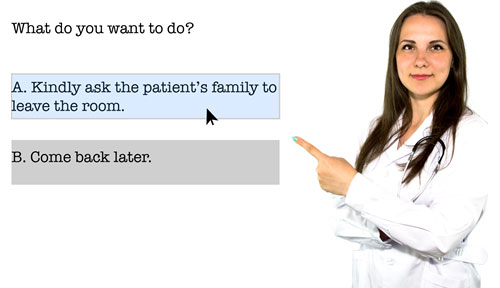
What is Scenario-Based Learning?
Instructional Designers use interactive activities to enhance engagement and increase retention in the learning process. Scenario-Based Learning (SBL) is used extensively in instructional design to enhance workforce training. Scenario-Based Learning creates a safe and authentic experience that allows learners to solve problems and make decisions similar to those they will experience on the job.

What is a Scenario?
A scenario is a situation that allows a learner to engage in the learning process in a realistic and relatable way. Instructional designers strive to create realistic situations that allow learners to apply their knowledge and skills. Scenarios should imitate a situation similar to one that the learner may come across in the real world or on the job.
Here is an example: Imagine you are developing a scenario for a newly hired flight attendant. You may present them with a situation in which a passenger has a peanut allergy. In this scenario you may suggest different actions the flight attendant may take, and allow them to choose what they feel is best.
How is Scenario-Based Learning Incorporated in eLearning?

There are many ways to add SBL to your eLearning training. Interactive videos, simulations, or branching scenarios are just a few examples of beneficial SBL activities. When creating these activities, there are a few things to keep in mind to ensure a beneficial learning experience:
- Learning Outcomes - What will your learners be expected to know and do by the end of this process? Prior to development, consider the learning outcomes and ensure that the SBL activity is directly targeting those skills.
- Audience - You will need to know who will participate in the scenario. Consider their prior experience and background knowledge on the subject.
- Engagement - The goal for instructional designers is to always engage the audience, this is equally important when it comes to SBL.
Here are a few strategies that instructional designers use when creating a Scenario-Based Learning activity:
- Incorporate storytelling - Telling a story will grab the learners’ attention and allow them to feel immersed in the experience.
- Create a realistic scenario - When creating SBL, the scenario should be fictional, but realistic. Create a situation that the learner may encounter in real life.
- Evoke emotion - Strong emotions hold higher value in real life, and in education. The best way to enhance engagement and retention in a learner is to evoke emotion.
Instructional designers recommend adding scenarios and interactive elements into your learning courses and workforce training. Overall, scenario-Based Learning is a great way to increase retention and engagement. SBL encourages learners to become active in the learning process and, when successful, will increase their confidence for applying these skills in the real world.
Are you looking to add more Scenario-Based Learning to your workforce training? The instructional design team at [company_name] can help you accomplish this. Contact us today for your free consultation.


0 Comments