

Introduction
AI can help us produce learning materials faster. Learning science helps us design experiences that people can remember and apply. Bringing those strengths together requires clear outcomes and thoughtful human judgment.
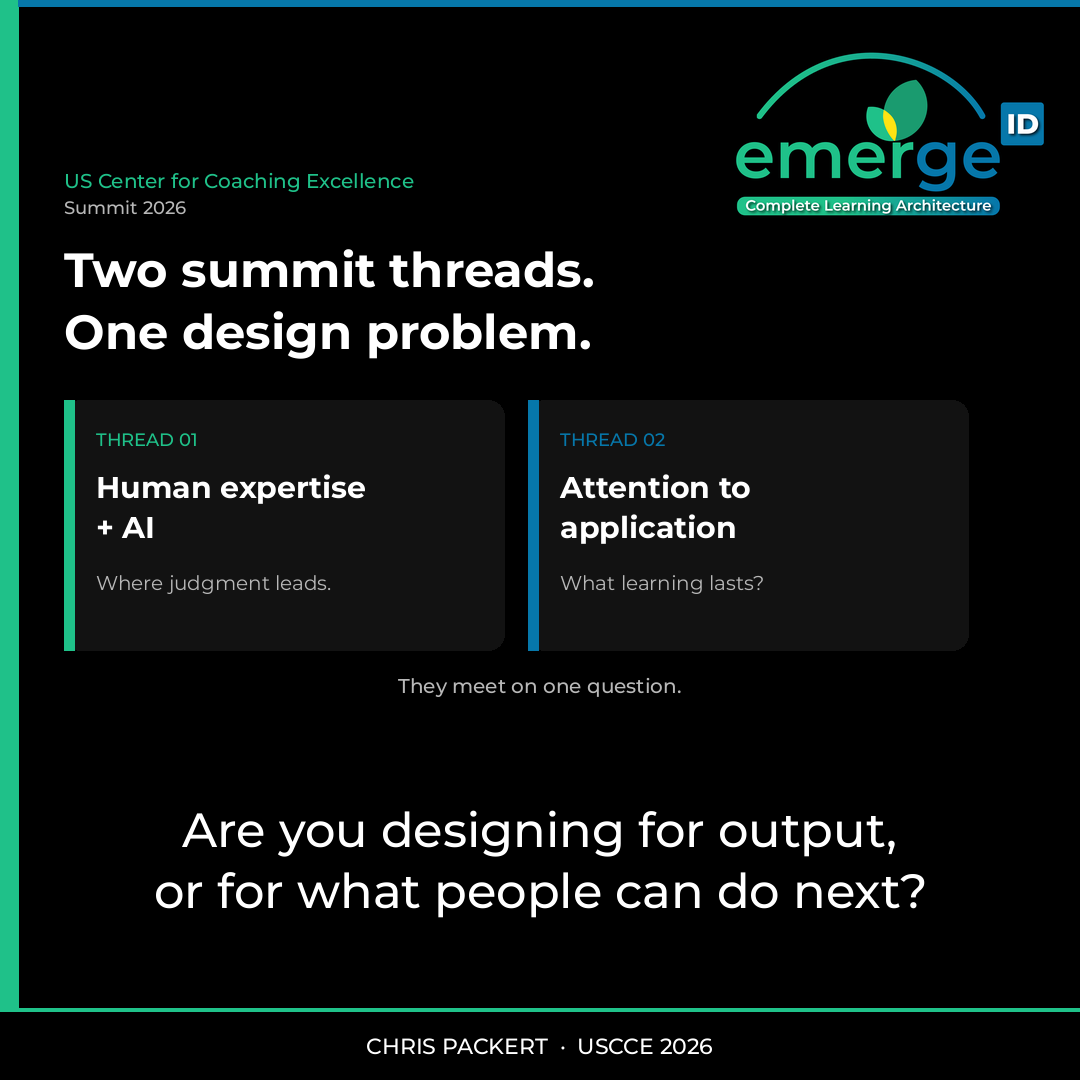
Recently, Emerge ID founder Chris Packert presented two sessions at the US Center for Coaching Excellence’s 2026 North American Coach Development Summit in Orlando: “Reimagining Learning and Development: Where Human Expertise Meets Artificial Intelligence” and “From Attention to Application: Core Principles of Learning Science.”
Both explored a question central to our work: How do we design learning experiences that build lasting capability?
A useful output is a starting point
AI can help a coach prepare a practice plan, adapt activities for different ability levels, or organize performance observations. It can also help learning professionals draft content, explore alternatives, and develop resources more efficiently.
Those contributions have value. Evaluating their impact means looking beyond the finished product.
Can the coach explain why an activity fits the objective? Recognize when it needs to change? Adapt it to the athletes and conditions in front of them?
A polished practice plan provides a resource. The ability to evaluate and adapt that plan demonstrates coaching capability. Learning design needs to support both.
This distinction matters across coach education and workforce learning. Production speed is one measure of progress. What people can do with the resulting materials is another.
Design for what happens after the session
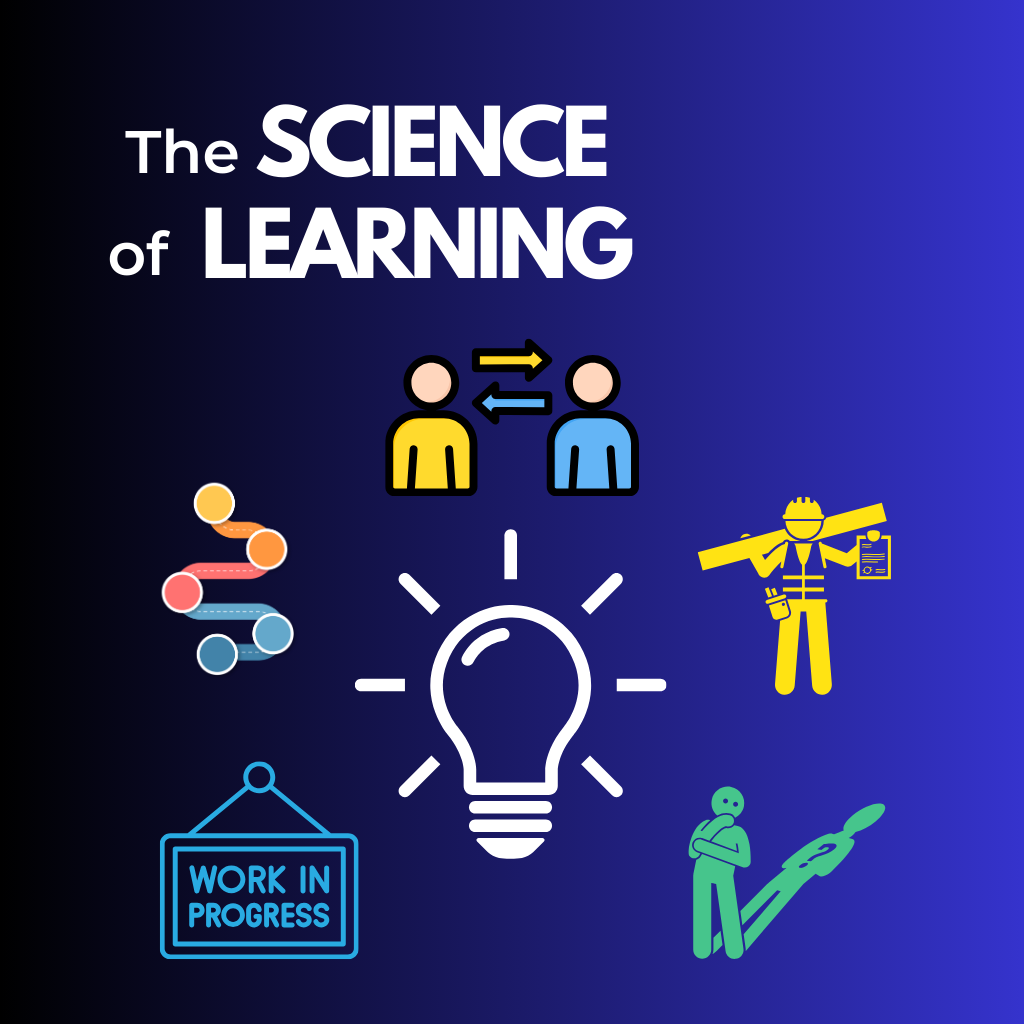
Learning science helps us connect the experience to the performance we want to see.
Attention supports encoding, while connections to prior knowledge help learners make sense of new ideas. Spaced practice supports retention. Retrieval practice strengthens learning and reveals gaps that learners and educators can address.
Applying that knowledge requires opportunities to make decisions, receive feedback, and try again.
In coach development, this might mean asking participants to adapt a practice plan when athlete needs or available space change, explain their choices, and revise their approach after feedback. A later follow-up could ask them to describe what they tried with their athletes, what happened, and what they would adjust.
The same approach can support workforce learning: practice a realistic decision, receive useful feedback, and revisit the skill over time.
These choices help connect a session that makes sense in the moment to learning people can use in the next practice, shift, or conversation.
Learning architecture before production
Both summit sessions converged on one principle: start by defining what people need to be able to do, then choose the knowledge, tools, and activities that help them get there.
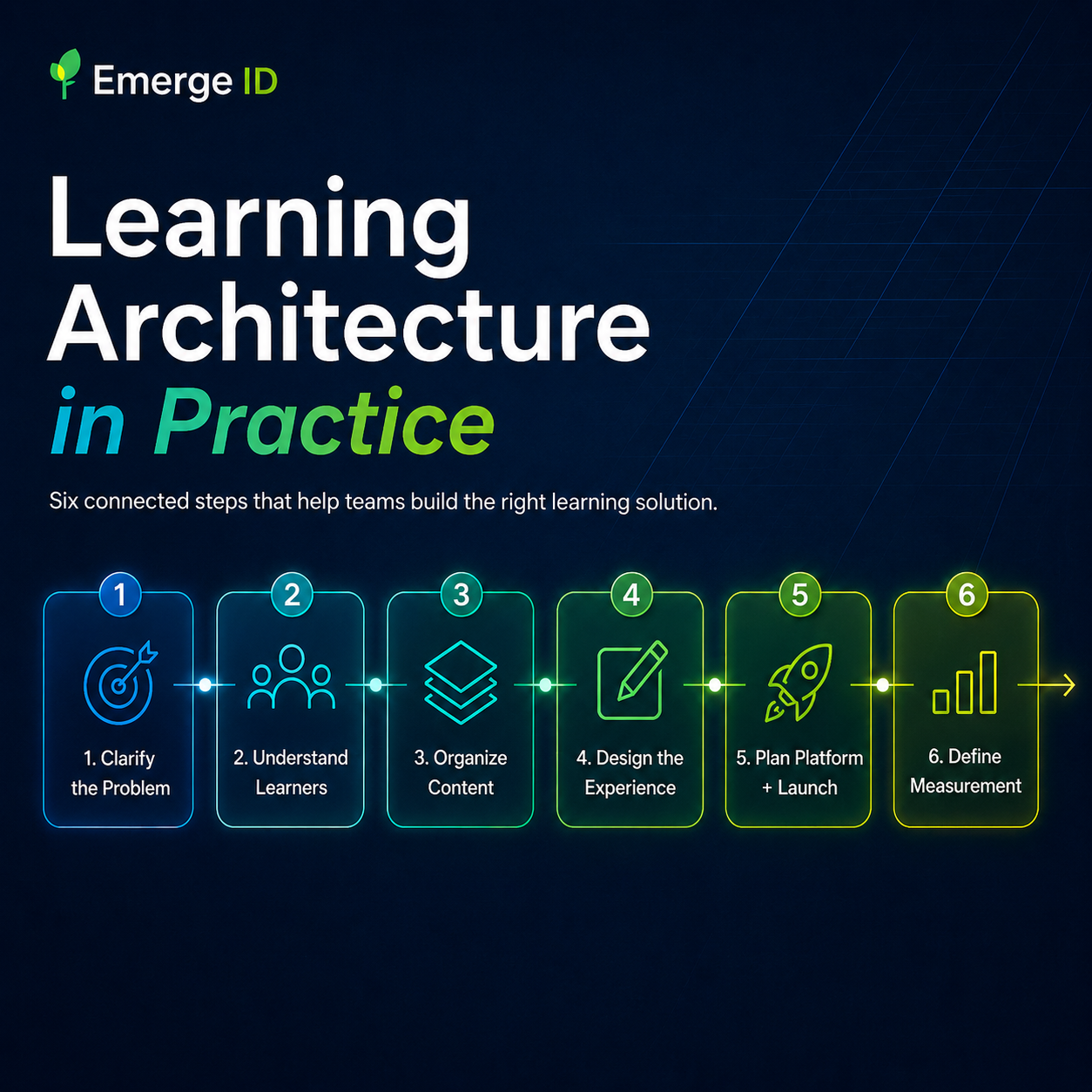
That is the heart of Complete Learning Architecture™ at Emerge ID.
We partner with organizations to define success, understand their learners and working conditions, and build purposeful learning pathways. Together, we shape the knowledge, practice, feedback, resources, and learning products that support the desired performance.
AI can contribute throughout that process by helping teams explore options, develop drafts, and adapt materials. Human expertise guides the decisions about relevance, accuracy, quality, and whether the experience prepares people to perform.
The goal is to help people explain their choices, adapt to changing conditions, and apply what they have learned, including knowing when and how to use the tools available to them.
Continue the conversation
If you design coach development or workforce learning, what is one practice you use to help people apply what they have learned after the session ends?
If your organization is exploring how to connect learning science, AI, and performance, we would welcome a conversation.
Contact Chris at [email protected] or visit emergeid.com to explore how we can work together.
Transformational Learning. Intelligent Design.


0 Comments